Signal Hub logoSignal Hub

JavaScript news and articles

JavaScript
Updated just now
Date
Source

7 articles

Dev.to (JS/TS)
~4 min readMay 6, 2026

Astro SEO Checklist 2026 and I…

Originally published at norvik.tech Dive into the Astro SEO Checklist 2026, analyzing its key tactics and implications for modern web development strategies. The Astro SEO Checklist for 2026 provides a comprehensive guide to optimizing web applications for better search engine performance. This checklist, derived from practical experience, highlights key areas often overlooked by developers, such as using the Image component effectively and ensuring proper metadata extraction. By addressing these areas, developers can significantly enhance the visibility and user experience of their applications. Astro is a modern framework for building fast, content-focused websites using a mix of JavaScript and static site generation techniques. As developers adopt this framework, understanding its SEO capabilities becomes crucial for ensuring that applications rank well in search results. [INTERNAL:astro-optimization|Explore our guide on optimizing Astro applications] The checklist emphasizes actionable tactics, focusing on: Correct use of image components Metadata extraction Performance optimizations Code splitting for faster load times Accessibility enhancements Implementing the Astro SEO Checklist involves a systematic approach to auditing web applications. By examining various components, developers can identify weaknesses in their current strategies. Here’s how it works: Audit Existing Implementations: Start by reviewing your current use of the Image component and ensure that all images have defined src attributes. Evaluate Metadata Usage: Check if the page's metadata is properly defined in accordance with best practices to enhance visibility. Performance Metrics: Utilize tools like Google Lighthouse to evaluate loading speeds and accessibility scores. To implement an optimized image component, use: This ensures images are loaded efficiently, improving overall performance. The importance of the Astro SEO Checklist lies in its potential to significantly impact web development practices. By adhering to these guidelines, developers can: Enhance Search Visibility: Proper implementation can lead to improved rankings in search engine results, driving more organic traffic. Increase User Engagement: Faster load times and better accessibility can lead to lower bounce rates and higher user satisfaction. Business Advantages: Companies that invest in SEO see measurable returns, such as increased conversion rates. Consider a mid-sized e-commerce company that implemented the checklist. Within three months, they reported a 30% increase in organic traffic and a 20% increase in sales attributable to improved SEO practices. The tactics outlined in the Astro SEO Checklist are applicable across various industries and project types. Here’s when and where to implement these strategies: E-commerce Platforms: Ensure product images are optimized for faster loading, impacting user purchasing decisions. Content-Heavy Websites: For blogs or news sites, proper metadata can enhance discoverability. Corporate Websites: Showcase services effectively by adhering to SEO best practices outlined in the checklist. These tactics are particularly relevant in sectors where online presence directly correlates with revenue—such as retail, hospitality, and digital services. Implementing the Astro SEO Checklist has specific implications for businesses operating in Colombia, Spain, and Latin America. Here's how these strategies translate into local contexts: Adoption Curves: Businesses in Colombia may face slower adoption rates due to limited resources for ongoing SEO audits. Cost Implications: Local companies might find it challenging to invest in advanced tools but can still apply basic strategies effectively. Regulatory Differences: Understanding local regulations regarding data privacy can affect how metadata is implemented. In Spain, companies adopting these tactics early could gain a competitive edge as market saturation increases. For example, a Colombian startup that follows the checklist might achieve visibility in local search results against larger competitors. In conclusion, the Astro SEO Checklist provides essential guidance for developers looking to optimize their web applications effectively. As you consider implementing these strategies, Norvik Tech can assist with tailored consulting services to help you navigate these changes. Conduct an Audit: Start by auditing your current website against the checklist. Implement Key Changes: Focus on critical areas such as image optimization and metadata usage. Measure Results: Use analytics tools to track improvements over time. By following these steps, you can ensure your website remains competitive and visible in an ever-evolving digital landscape. The Astro SEO Checklist is a set of guidelines designed to help developers optimize their Astro-based web applications for better search engine visibility. By following the checklist's recommendations, you can enhance loading times, improve accessibility scores, and ultimately drive more organic traffic to your site. Yes, while particularly beneficial for e-commerce and content-heavy sites, the tactics outlined can be adapted for various types of web applications. Norvik Tech builds high-impact software for businesses: consulting development 👉 Visit norvik.tech to schedule a free consultation.

Dev.to (JS/TS)
~8 min readMay 6, 2026

Track QR Code Scans in GA4 Without Losing Attribution

You launch a print campaign. Posters go up, menus get new QR codes, product packaging ships with a fresh scan prompt. Two weeks later you open GA4 to measure performance and see a spike in direct traffic. No campaign, no source, no medium. Your QR scans are in there somewhere, mixed in with people who typed your URL by hand. This is the default behavior for QR code GA4 tracking, and it will keep breaking attribution on every physical campaign you run until you fix it. TL;DR QR scans arrive in GA4 as direct traffic because phones send no HTTP referrer when opening a URL from a camera app. The fix is always-on UTM tagging: every QR destination URL needs at minimum utm_source, utm_medium, and utm_campaign. GA4 has no built-in QR channel — create a custom channel group so tagged QR traffic is not bucketed as "Unassigned." Use a consistent lowercase naming convention or your data fragments into separate line items that look like different sources. QR platform analytics and GA4 serve different purposes — use both, not one or the other. Key concept: GA4 classifies every session by traffic source. When no UTM parameters and no HTTP referrer are present, GA4 defaults to "direct / (none)." That is exactly what happens with every untagged QR code scan. GA4 identifies traffic source from two places: UTM parameters in the URL and the HTTP referrer header sent by the browser. Click a link on a webpage and that page's URL gets passed along as the referrer. Click an email link and the email client usually strips the referrer, which is why email marketers have been tagging URLs with UTM parameters for years. QR codes are the same problem, only worse. Someone scans a QR code and their phone opens the URL in a fresh browser tab. No previous page to reference. No referrer sent. GA4 sees an empty source and files the session under "direct / (none)." Every untagged QR campaign you run inflates your direct traffic number and vanishes from campaign reports. You cannot prove which placement drove visits, which campaign generated conversions, or whether your print spend was worth a dime. UTM parameters are query string tags appended to a destination URL. GA4 reads them on arrival and stores them as session-scoped dimensions, overriding whatever referrer data the browser would have sent. For QR codes, UTMs are not optional. They are the only attribution signal you have. utm_source — Where the traffic originates. For QR codes, use qr as a standard value across all campaigns. This makes it easy to create a single GA4 channel rule that captures all QR traffic regardless of format. utm_medium — The channel type. Options include offline, print, packaging, outdoor, event. Pick the one that reflects the physical format. utm_campaign — The campaign name. Keep it descriptive and lowercase: summer_menu_2026, trade_show_april, product_launch_q2. utm_content — The specific placement within a campaign. utm_content=lobby_poster versus utm_content=table_card versus utm_content=receipt_footer gives you placement-level data inside a single campaign. utm_term — Skip it for QR campaigns. It was designed for paid search keyword tracking and adds noise without value in an offline context. A properly tagged URL for a restaurant running a summer menu campaign: https://example.com/menu?utm_source=qr&utm_medium=print&utm_campaign=summer_menu_2026&utm_content=table_card Same campaign, different placement: https://example.com/menu?utm_source=qr&utm_medium=print&utm_campaign=summer_menu_2026&utm_content=entrance_poster In GA4, these sessions show up in Traffic Acquisition under source qr, medium print, campaign summer_menu_2026. Break down by utm_content to see which placement drove more scans or deeper engagement. GA4 is case-sensitive for UTM parameter values. utm_source=QR and utm_source=qr show up as two different sources. Pick your values, document them, enforce them. This is far and away the most common UTM mistake in practice. Even with perfect UTM tagging, GA4 will not know what to do with sessions where session_source = qr and session_medium = offline. The default channel grouping has no rule for these values, so they land in "Unassigned." You need a custom channel group. Go to GA4 Admin and select your property. Under Data Display, click Channel Groups. Click Create new channel group. Name your channel group "QR Campaigns" or copy the default channel group and add a new channel. Click Add new channel and name it "QR Code." Set the rule condition: Dimension: Session source Condition: exactly matches Value: qr If your team already uses multiple source values, add multiple conditions with OR logic. GA4 evaluates channel rules from top to bottom and stops at the first match. Place your QR Code channel above the broad catch-all rules like "Unassigned" or "Direct" so QR sessions are claimed before they fall through to a default bucket. Click Save. One caveat: this rule is not retroactive. Sessions collected before you created it stay where they are. Use GA4's Realtime report to test right away. Scan one of your tagged QR codes on your phone and watch the active users report. Within a few seconds the session should appear with the correct source, medium, and campaign. If you see direct traffic instead, a redirect probably stripped the UTM parameters. URL redirect chains trip up even experienced marketers. If your tagged URL goes through a redirect that strips query parameters, the UTM values disappear before they reach the landing page. The typical failure: you tag a URL, shorten it, and the shortener's redirect does not preserve query strings. The user lands on your page with a clean URL and GA4 records a direct session. Test every redirect in your chain before printing anything. Dynamic QR codes sidestep this. Instead of encoding a long UTM-tagged URL directly, the QR code points to a short redirect URL managed by your QR platform. The platform redirects to your destination with UTM parameters intact and lets you change the destination URL later without reprinting. For long-running campaigns, that flexibility alone is worth the switch. These tools track different things, and you need both. A QR platform captures scan-level data: total scans, unique scans, device type, OS, location by country and city, time-of-day patterns. All of this is recorded the moment someone scans, before they reach your website. It tells you how many people scanned and where. GA4 picks up after the landing page loads. Pageviews, events, conversions, session duration, goal completions. It tells you what scanners did once they arrived and how many converted. A QR campaign might show 400 scans in the platform dashboard but only 220 sessions in GA4. That gap is real: users who bounced before the GA4 script fired, or users on devices with JavaScript disabled. Comparing scan data against session data is the only way to understand drop-off at the scan-to-landing-page step. The most common one, and the most painful. Every QR code destination URL must be tagged. No exceptions. If you already have QR codes printed on materials without UTM parameters, that attribution data is gone. You cannot recover it. Adding UTM parameters to links between pages on your own website overwrites the session source mid-visit. A user arrives from your QR code, clicks a UTM-tagged internal banner, and GA4 reassigns the session to the banner as the source. Keep UTM parameters on external-to-your-site links only. Same tagged URL across five different placements means five placements sharing one line item in GA4. Worth creating a unique QR code for each placement, even if it takes a few extra minutes. Someone on your team launches a new campaign with utm_source=qr-code while every previous campaign used utm_source=qr. Now you have a separate source row in GA4 that cannot be merged after the fact. A shared UTM naming doc, reviewed before each launch, prevents this. Printing 10,000 flyers with a broken QR code is an expensive lesson. Scan your QR code with GA4 Realtime open before sending anything to print. Confirm the UTM parameters survive every redirect in the chain. With tagging and the channel group in place, build a focused QR campaign report in Explore using a free-form exploration. Dimensions to include: Session campaign — separates individual campaigns Session source / medium — confirms QR sessions are properly tagged Session manual ad content — surfaces your utm_content placement data Landing page + query string — useful for catching untagged QR sessions that slipped through Metrics to include: Sessions Engaged sessions Engagement rate Key events (conversions) User engagement duration Filter the exploration to Session source exactly matches qr to isolate QR traffic. Save it once and revisit across campaigns without rebuilding. QR code attribution in GA4 is not a platform limitation. It is a setup problem you can solve in an afternoon. Tag every destination URL with consistent UTM parameters, create a custom channel group so GA4 knows what to do with that traffic, and test before you print. Those three steps recover attribution that most marketers are losing to the direct channel bucket right now. Originally published on QR Nova

JavaScript Weekly
~6 min readMay 5, 2026

Remix 3 drops React

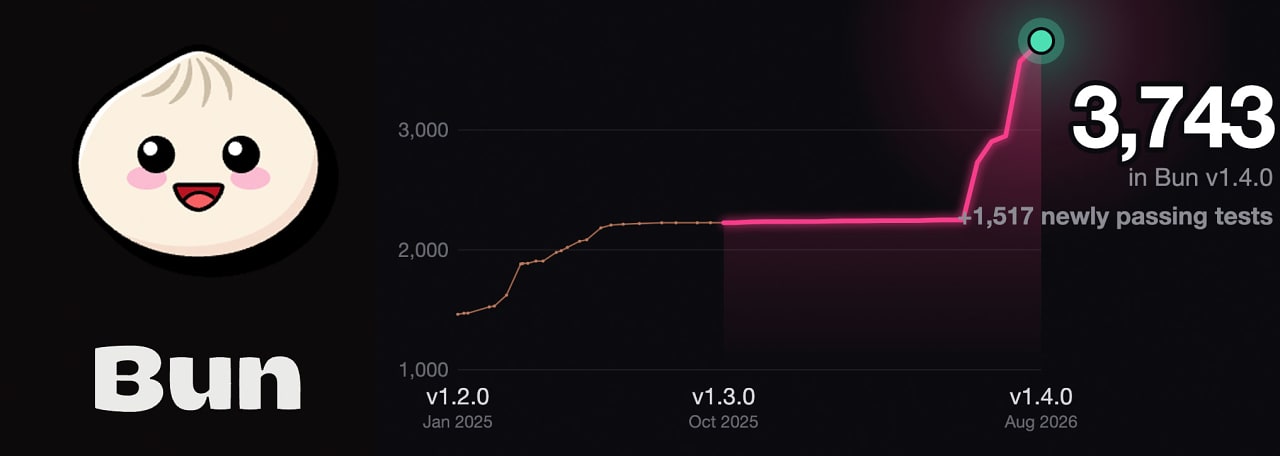
#​784 — May 5, 2026 Read on the Web JavaScript Weekly Remix 3 Enters Beta — It's No Longer a React Framework — Remix has quite the back story. Created by the duo behind React Router in 2020 and seen as an alternative to Next.js, Remix was acquired by Shopify in 2022 and its core ideas folded into React Router v7 in 2024. Now, a new direction: a full-stack, web standards-first framework with its own UI component model and… no React. Michael Jackson (Remix) Build AI Features That Get Better Over Time — Join Scott Moss for this detailed video course covering agentic systems, eval harnesses, RAG, and context engineering — everything you need to ship reliable, production-ready AI features. Frontend Masters sponsor Node.js 26.0.0 (Current) Released — A macOS build snafu pushed the release date out to today, but the latest version of Node is here, complete with Temporal API enabled by default, V8 14.6, and Undici 8. v26 is the ‘current’ cutting-edge release until October when it’ll be promoted to LTS. Rafael Gonzaga IN BRIEF: Vitest is tightly coupled to Vite, but a maintainer has proposed making it "framework-agnostic" to support other build tools and runtimes. People on Hacker News got very excited to discuss an effort by Bun's Jarred Sumner to port Bun from Zig to Rust. Jarred turned up on the thread to cool things down. A Rust port is being attempted, but with no long-term intent to switch for now. The Svelte team has shared its latest monthly roundup, including the news that Svelte appears in ThoughtWorks' latest Technology Radar. Deno is getting experimental support for import defer (TC39 proposal) and may be the first runtime to support it. RELEASES: PM2 7.0 – The Node.js process manager gets a refactor that slashes its dependency footprint, and extends cluster mode and the monitoring agent to Bun apps. Astro v7 Alpha – The web framework for content-driven websites teases its Vite 8-based, Rust compiler-driven version, alongside its v6.2 release. Electron 41.5 – The cross-platform desktop app framework adds support for Touch ID for WebAuthn on macOS. Ember 6.12 – The final 6.x release in preparation for Ember 7.0. ESLint 10.3, Zod 4.4, Babylon.js 9.5 📖  Articles and Videos Testing Vue Components in the Browser — Julia sets up integration tests for her components that run entirely in the browser, sidestepping extraneous tooling, and shares issues she ran into around mounting components, waiting on the DOM, filling forms, and measuring coverage. Julia Evans Trustworthy JavaScript for the Open Web — Web Application Integrity, Consistency and Transparency (WAICT) is an emerging spec for cryptographically verifying that the JavaScript running in a user’s browser matches what the site published (there’s a full explainer here). A prototype is now live in Firefox Nightly. The Firefox Security Team (Mozilla) Breakpoints and console.log Is the Past, Time Travel Is the Future — 15x faster JavaScript debugging than with breakpoints and console.log, supports Vitest, Jest, Karma, Jasmine, and more. Wallaby Team sponsor 📄 'I Got a $134 Cloudflare D1 Bill: Here's How I Cut It 95%' – Adventures in using SvelteKit on Cloudflare Workers with D1 (SQLite) and Drizzle ORM. Justin Ahinon 📄 'I Am Worried About Bun' – By a developer who’s worried about the long term implications of Anthropic acquiring Bun. William Johnston 📄 Making Bluetooth Low Energy Work with JavaScript Ifedayo Agboola 🛠 Code & Tools Anime.js 4.4: The Flexible JavaScript Animation Engine — At ten years old, the ‘animate anything from JavaScript’ library continues to get even better with a new scrambleText effect and auto-grid layout mode for stagger grids. The docs for Anime are truly top-tier and packed with examples. Julian Garnier Video Archiving with the Vonage Video API and React — Master four ways to record: capture audio-only, separate streams, or use Experience Composer for custom branded layouts. Vonage sponsor Formisch: A Modular, Type-Safe Form Library — A schema-based, headless form library for Preact, Qwik, React, SolidJS, Svelte and Vue that manages form state and validation (using Valibot). Try out some demos in the playground. Open Circle opentype.js: Read and Write OpenType Fonts — Get direct access to letterforms in the browser and Node.js. Has broad WOFF, OTF, and TTF support, and supports ligatures, kerning, and emojis. You can also create your own fonts from scratch. The new v1.3.5 release is a preview of the soon-to-land 2.0. GitHub repo. Frederik De Bleser View Transitions Mock: Non-Visual Polyfill for Same-Document View Transitions — A JS implementation of Same-Document View Transitions, without the visuals. Write one clean code path: supporting browsers get the transitions, non-supporting ones get an instant DOM swap, but the promises behave the same. Google Chrome Labs 🎬 Mediabunny v1.42.0 – Read, write, and convert audio and video files in the browser. v1.42.0 notably adds HTTP Live Streaming (HLS) read/write support. pnpm v11.0.5 – The fast and efficient npm alternative has deployed many bugfixes since last week's big 11.0 release. Electrobun 1.18 – Build tiny cross-platform desktop apps atop Bun. (Changelog) useHotkeys 5.3 – React hook for using keyboard shortcuts in components. RxDB 17.2.0 – Fast, local-first, reactive database for JS apps. 📰 Classifieds ⌘ Command Code is a frontier coding agent that ships features, fixes bugs, writes tests, & continuously learns your taste. Start now for $1. Flaky tests slowing down dev? Meticulous gives engineers confidence to ship faster by autonomously testing every edge case of your web app. ⚙️ The new Clerk CLI: Run clerk init to scaffold auth, clerk config to manage it in code, Clerk API to query it. Open source: clerk.com/cli Handsontable Theme Builder has AI. Describe your theme, get a token set that fits your data grid — no CSS overrides, no trial and error. 📢  Elsewhere in the ecosystem How can you not love a project homepage where you're a cat in a convertible driving through an endless barrage of obstacles? Crashcat is a JavaScript 3D rigid body physics library built for games, simulations, and web experiences, complete with numerous fun examples. ✉️ Cloudflare has open sourced Agentic Inbox, a self-hosted React 19 and React Router 7-based web email app that ties together and heavily leans on numerous Cloudflare APIs. Ladybird is a "truly independent web browser" with its renderer and JS engine built entirely from scratch, with an alpha release due later this year. In the project's latest update they cover recent significant JS and CSS improvements. Tired of localhost:3000 on your projects? Vercel's Portless lets you run local dev servers using a more user-friendly .localhost hostname over HTTPS. Thales is a TypeScript to Lean compiler that type-checks a subset of TypeScript and emits a Lean sidecar, turning your code into a Lean module you can reason about.

JavaScript Weekly
~6 min readApr 28, 2026

What’s actually new in JavaScript (and what’s coming next)

#​783 — April 28, 2026 Read on the Web JavaScript Weekly pnpm 11.0 Released — You’ve heard about its benefits, but now the popular package management tool is even better. v11 sets minimumReleaseAge to one day by default, there's an SQLite-backed store index (faster installs!), native package publishing, pack-app, and more. There's a migration guide for v10 users. Work has also resumed on a Rust-powered port called Pacquet. Zoltan Kochan 💡 On the topic of package managers, Aube is a new contender from the creator of Mise that focuses heavily on performance. Still Writing Tests Manually? Meticulous AI Is Here — Notion, Dropbox, Wiz and LaunchDarkly now use a testing paradigm they can’t work without. Built by former Palantir engineers, Meticulous automatically creates an evolving suite of E2E UI tests, delivering exhaustive coverage with no developer effort. Meticulous sponsor TypeScript 7.0 Beta: 10x Faster TypeScript Compilation — The Go-powered port with “about 10 times faster” compiler performance. TypeScript 6.0's deprecations and config changes will help you upgrade smoothly from v5 to v7. There are also changes to how to write your code to review. While v7 is considered "close to production-ready", a stable programmatic API won't arrive till v7.1. Microsoft IN BRIEF: Node.js v26.0 (Current) is expected later today, enabling Temporal API support by default after an upgrade to V8 14.6. Here's a preview of the release notes. Noticed GitHub being flakier than usual lately? Vlad Fedorov has a fresh official update on GitHub's reliability (including last week's merge queue incident). 🇪🇺 NodeConf EU is back. It's in Bologna, Italy this September 29-30. Tickets are on sale, and here's the CFP if you want to speak. RELEASES: Rspack 2.0 – The fast, Rust-based webpack-compatible bundler is 10% faster than v1.7, performs better static analysis, and adds experimental RSC support. Rsbuild 2.0 was released too. Nuxt UI 4.7 – Vue UI library with 125+ components. v4.7 adds Listbox, and a Prompt component for displaying copy/pasteable AI prompts. 🌐 Lingui 6.0 – Popular framework and runtime agnostic JS i18n and l10n library. Transformers.js 4.2.0, Electron 41.3.0, Etherpad v2.7.0 📖  Articles and Videos What’s Actually New in JavaScript (And What’s Coming Next) — You could read the specs and countless posts about each new language feature or... this post that brings everything relevant and useful from ES2025 and ES2026 into one place. Iterator helpers, Promise.try, Map.getOrInsert, using, Temporal, and much more, are covered. Neciu Dan Stop Guessing Where Your Next.js App Broke [Workshop] — Learn to trace Next.js errors back to their source using logs and tracing. Free workshop, register today Sentry sponsor 📄 Debugging WASM in Chrome DevTools – Tips on using the Chrome DevTools’ “very capable WASM debugger”. Eli Bendersky 📄 Writing Node.js Addons with .NET Native AOT – You can now write native Node addons in .NET-based languages, such as C#. Drew Noakes (Microsoft) 📄 The Simplest C Function-to-WebAssembly-to-JS Pipeline Peter Cooper 📄 Upgrade Cypress to TypeScript 6.0 Gleb Bahmutov 🛠 Code & Tools TSRX: A TypeScript Language Extension for Declarative UIs — A fresh attempt at improving upon JSX from a Svelte maintainer and former React core engineer. It includes control flow, scoped styles, and locals, and compiles to React, Preact, Solid and Ripple. Dominic Gannaway 📊 Lightweight Charts™ 5.2: Fast Charts for Financial Data — A seven-year-old canvas-based charting library optimized for financial data use cases like rounded candle plots, box whisker plots, and dual range histograms. The homepage is full of interactive demos. GitHub repo. TradingView Clerk CLI: Manage Auth from Your Terminal — Detects your framework, scaffolds auth, and manages sign-in methods and session policies in code. Open source. Clerk sponsor Nano Stores 1.3: A Tiny (286 Bytes) State Manager — Atomic and derived stores for every major framework (including React) and vanilla JS. Worth a look if a tiny footprint and framework-agnostic design appeal to you. Andrey Sitnik (Evil Martians) BWIP-JS 4.10: Barcode Writer in Pure JavaScript — A library to generate barcodes using over 100 different standards. There’s a live demo where you'll discover far more types of barcodes exist than you imagined. Mark Warren 🍋 Fresh 2.3: Zero JS by Default, View Transitions, and More — Deno full-stack web framework (explained here) gains first-class WebSocket support, no longer ships any JavaScript for pages that don’t need it, and makes using the View Transitions API a snap with a single attribute in your views. Bartek Iwańczuk (Deno) 🎬 Mediabunny v1.41.0 – Powerful JavaScript toolkit for working with media files. hyperid 4.0 – Matteo Collina's fast unique ID generator for Node & browsers. Svelte Bricks 0.5 – Svelte masonry component with SSR support. focus-trap 8.1 – Trap focus within a DOM node. (Demo.) CheerpJ 4.3 – Run unmodified Java apps in the browser. qrcode.vue 3.9 – Vue component to generate QR codes. 📰 Classifieds 📸 Scan barcodes, QR codes and others directly in the browser using STRICH, a lean JS library. Free 30-day trial, try the demo app today! ⌘ Command Code is a frontier coding agent that ships features, fixes bugs, writes tests, & continuously learns your taste. Start now for $1. 📢  Elsewhere in the ecosystem 🎵 I've been dying to link to Chip Player JS again for a while now. It's a JavaScript powered online player and repository of over 300,000 MIDI, tracker, chiptune, and video game music files. It's fantastic for background music, and if you can remember a game, it's probably in here. Chrono Trigger's soundtrack is a particular favorite of mine. 📊 Datatype is an OpenType variable font that turns simple text expressions into inline charts with no JavaScript or images needed. For example: {l:10,50,30,80,20} gets rendered as an inline sparkline. 🤖 Cloudflare's new Is Your Site Agent-Ready? tool analyzes your site to "see how ready it is for AI agents." 🤖 Cloudflare has released a set of agent skills to help agentic development tools build on the Cloudflare platform. Sean Goedecke explains how good engineers write bad code at big companies. If all else fails, just stare at the wall for ten minutes.

JavaScript Weekly
~6 min readApr 21, 2026

Create videos with HTML and JavaScript via HyperFrames

#​782 — April 21, 2026 Read on the Web JavaScript Weekly HyperFrames: Write HTML and JavaScript to Create Videos — An open-source framework for creating and rendering videos with HTML and JavaScript. Essentially a simpler non-React alternative to Remotion. It includes a variety of built-in blocks/components for common video effects and elements, and can also composite existing video and audio clips. GitHub repo. HeyGen Still Writing Tests Manually? Meticulous AI Is Here — Notion, Dropbox, Wiz and LaunchDarkly now use a testing paradigm they can’t work without. Built by former Palantir engineers, Meticulous automatically creates an evolving suite of E2E UI tests, delivering exhaustive coverage with no developer effort. Meticulous sponsor The Vercel Breach That Started with a Roblox Cheat — An employee of an AI tool provider used by a Vercel employee was compromised by malware (bundled with a Roblox cheat!) and the attacker used that foothold, by way of Google Workspace, to reach a subset of Vercel customers’ environment variables. Vercel 💡 Vercel users should follow these steps, but even if you're not one, the weak link was an OAuth grant to a third-party tool, and that pattern is nearly universal. IN BRIEF: Node.js is moving to support the Temporal API by default, most likely in Node v26 which is expected next week. Salesforce ecosystem devs are used to using specific frameworks within its walled garden; now you can build native React apps on Salesforce. Rust's official package/crate registry, crates.io, is migrating from Ember.js to Svelte 5. RELEASES: Node.js 24.15.0 (LTS) – require(esm) and the module compile cache are marked as stable, and --max-heap-size has been added. Fable 5.0 – A mature F# transpiler that targets JavaScript (plus other languages). v5.0 adds .NET 10 and F# 10 support. uuid 14.0 – Create RFC9562-compliant UUIDs (v1 through v7). 📖  Articles and Videos ▶  Evan You's State of Vue 2026 Talk — A month ago, Evan You (of Vue.js and VoidZero fame) gave his annual address. Less Vue-focused than usual (though Vapor Mode is “almost ready”), the talk focuses on Vite-ecosystem updates covering Vite 8, Vite+, and Void. Evan You / Vue.js Amsterdam How I Resolved 15K Circular Dependencies — A senior Microsoft engineer’s retrospective of clearing ~15,000 project-level circular dependencies from a 7 million line(!) TypeScript monorepo, with reusable ideas for anyone wrangling a large TS workspace. For some reason this article no longer exists as of April 24. Stefan Haas Your Agent Ships 10 Ideas a Day. You Get 2 Databases? — Your agent builds faster than a 2-project free tier allows. ghost gives it unlimited Postgres. 1TB storage. Try free. ghost sponsor The Vertical Codebase — Structuring an app with folders like components/, hooks/, and utils/ feels tidy at first, but gets harder to live with over time. Dominik makes the case for a vertical, domain-first approach. Dominik Dorfmeister 🔒 The OWASP NPM Security Best Practices Cheat Sheet — A useful, long-standing checklist that continues to be updated with recent updates tackling disabling lifecycle scripts, typosquatting, trusted publishing, and dependency confusion. OWASP Cheat Sheet Series How We Made the Angular Compiler Faster Using AI — Two of VoidZero’s developers wanted to see how fast an Angular compiler they could make. Very fast, it turns out. Brooklyn and Michael Dong (VoidZero) 📄 Why I Don't Chain Everything in JavaScript Anymore – Long chains of methods vs. an easier-to-read sequence. Matt Smith 📄 The Scope of Type Guards and Assertion Functions Stefan Judis 🛠 Code & Tools Bun v1.3.13: Smarter Testing, Streaming Installs, and Less Memory — The Bun runtime has had a great run of releases, including last week’s v1.3.12 with built-in browser automation. Now, bun test gets numerous enhancements with --isolate, --parallel, --shard and --changed options for test env isolation, parallelization, and to run only test files affected by recent changes. The runtime now uses 5% less memory, bun install gets faster, and more. Jarred Sumner Introducing B2B Authentication — Clerk combines Organizations, SCIM, SSO, RBAC, invites, and billing to build enterprise-ready apps. Clerk sponsor Animata: Over 100 Animated React Components — A suite of novel animation-focused React components you don't often see elsewhere, including animated beams, spreading cards, and a Slack-style intro screen. Codse 📄 officeParser: A Library to Parse Common Office-Related Formats — Work with formats like docx, pptx, xlsx, odt and others used by office suites, both in the browser and server-side. GitHub repo. Harsh Ankur 🎵 tiks: Procedural UI Sounds for the Web — Clicks, pops and pings synthesized with the Web Audio API (so it’s tiny). Rexa TypeGPU 0.11 – TypeScript WebGPU toolkit with advanced type inference and the ability to write shaders in TypeScript. 📺 Shaka Player 5.1 – JavaScript library for adaptive media playback supporting DASH and HLS. (Demos.) TiddlyWiki 5.4 – Self-contained JavaScript wiki for personal use. (Repo.) ✂️ Knip 6.6 – Popular tool for finding and removing unused files, dependencies and exports. wasm-xlsxwriter 0.13 – Generate Excel files in the browser or Node. React Three Fiber 9.6 – The React renderer for Three.js. np 11.2 – A better npm publish. 📰 Classifieds HyperFormula AI SDK: Give LLMs a deterministic engine to safely read, write, and calculate spreadsheet formulas. No hallucinated math. Gauntlet AI Night School | RAG that holds up in production requires evaluation built in from the start. Learn how. (Virtual — 4/22) Builders Learn from Builders. From one builder to another: Join Mark Rober at Twilio SIGNAL, May 6–7 in San Francisco. Register for a discounted developer ticket here! 📢  Elsewhere in the ecosystem Git 2.54 has been released with a couple of headline features: git history offers a new, easy way to edit commit messages or interactively split a commit into two. You can now define hooks in config files (whether in a repo, at user level, or even system level) rather than just in .git/hooks. You can also run multiple hooks for the same event in this way. If you ever work with Ruby on Rails, you might find rails_vite interesting. It's a new tool that seamlessly brings the power of Vite into Rails' pipeline. 💥 Anyone who's analyzed GitHub projects for a while knows this already, but there's a huge 'fake star' economy where people pay to make their projects look more popular than they are. Isa Yeter explains how he migrated from DigitalOcean to Hetzner slashing his hosting bill by 84% in the process. Cloudflare has released a preview of its new cf CLI tool for working with its various services.

JavaScript Weekly
~6 min readApr 14, 2026

MDN ditches React for web components in frontend rebuild

#​781 — April 14, 2026 Read on the Web JavaScript Weekly Under the Hood of MDN's New Frontend — The hugely useful MDN has rebuilt its frontend stack from the ground up, ditching React for web components and a homegrown server component system. A great read on building a modern, content-heavy site without shipping unnecessary JavaScript on every page. Leo McArdle (MDN) Ship Mobile Apps The Way You Ship Websites — Expo gives JavaScript developers a web-like workflow for native mobile. Hot reload on device. OTA updates that skip app store review. Cloud builds that work like Vercel. Start with npx create-expo-app. Expo sponsor 🕹️ Phaser 4.0: The 2D WebGL and Canvas-Based Game Framework — The widely used game framework celebrates its 13th birthday with a major release focused on perf/efficiency improvements, and includes skills files so AI agents can build Phaser 4.0 apps well. There are lots of demos, including these games, and existing users get a v3 to v4 migration guide. Phaser Studio Inc. IN BRIEF: Google will penalize sites that 'hijack' the back button in its search results from June. "Ensure you are not doing anything to interfere with a user's ability to navigate their browser history," says Chris Nelson. TanStack Start now has (experimental) React Server Components support. 🇫🇷 dotJS returns to Paris, France this September 18 – its CFP is open for two more weeks if you'd like to speak. 🇷🇴 The JSHeroes conference is back this May 14-15 in Romania. RELEASES: Bun v1.3.12 – The JS runtime now ships with native, headless browser automation built in, and Bun.cron provides an in-process task scheduler. ⚠️ React 19.2.5, 19.1.6 and 19.0.5 have been released to deploy a fix for a React Server Components vulnerability. React Native 0.85 – New animation backend and devtools improvements. pnpm v11.0 RC 0, React Three Fiber 9.6, Electron 41.2, DOMPurify 3.4 📖  Articles and Videos Installing Every Firefox Extension — One person’s entertaining and heroic tale of wielding JavaScript to explore the Firefox extension ecosystem. And what oddities there are within! I enjoyed this a lot, it’s like Alice in Wonderland for developers. More spelunking like this please. Jack Cab Uses for Nested Promises — James revisits 2013's Promises/A+ monads debate and has changed his mind, thanks to a real concurrency problem he ran into. Demanding but rewarding. James Coglan 44 Postgres Talks To Choose From All in One Free, Virtual Event — Join POSETTE: An Event for Postgres 2026, a free & virtual Postgres developer event, 16–18 Jun. Check out the schedule. Microsoft | AMD sponsor You Can't Cancel a Promise (Except Sometimes You Can) — You can’t cancel a promise, but you can halt an async function by making it await a promise that never resolves. The function silently stops, and GC cleans up after it. Aaron Harper (Inngest) Parse, Don't Validate (In a Language That Doesn't Want You To) — Tired of writing the same defensive if check in multiple files because you can’t trust that validation already happened? Branded types and discriminated unions can let TypeScript carry that proof for you. Christian Ekrem 🌐 The Intl API: The Best Browser API You’re Not Using — A neat code-heavy primer to what you can do with Intl. Kilian Valkhof 📄 Making Our Frontend Unit Tests Much Faster with @swc/jest – From 15 seconds with Jest to 4 seconds with the compatible @swc/jest. Sebastian Herrmann 📄 Creating Custom Page Transitions in Astro with Barba.js and GSAP Iqbal Muthahhary (Codrops) 📄 The Uphill Climb of Making Diff Lines Performant on GitHub Ghenco and Shwert (GitHub) 📄 Building a JavaScript Runtime with QuickJS Andrew Healey 🛠 Code & Tools Boneyard: Auto-Generated Skeleton Screens for Your UI — Snapshots your real UI and captures a flat list of skeleton ‘bones’ which are positioned, sized rectangles that mirror the page exactly. Supports React, Preact, React Native, Vue, Svelte, and Angular. 0xGF 📈 Micro-ML: A Toolkit of Forecasting and Clustering Algorithms — A ~56KB WASM-powered library with algorithms for regression and smoothing. Cluster points, classify data, or predict the next value in a series without dragging in TensorFlow.js. Adam Perliński AI Writes Code. Wallaby MCP Makes Sure It Actually Works — Give your AI agent live execution data, coverage, and real-time insights to generate tests and code with confidence. Wallaby Team sponsor Ink 7.0: Use React to Build TUIs and Command Line Apps — Powering many popular terminal apps, v7.0 now leans on React 19.2, uses useEffectEvent internally for added efficiency, and brings new hooks and settings. Vadim Demedes 🔊 web-audio-api: Use the Web Audio API from Node and Bun — Full Web Audio API support to either play audio on your machine/server or render it to file (and, yes, Tone.js works too). There are many examples to enjoy. Sébastien Piquemal Syncpack: Consistent Dependency Versions in Large JS Monorepos — A CLI tool (used by Electron, Cloudflare, Vercel and others) that finds version mismatches across your entire monorepo, fixes them, and can enforce version policies in CI to avoid future drift. Jamie Mason Mantine 9.0 – The wildly popular React component suite now includes a complete set of calendar scheduling components. wa-sqlite 1.1 – WebAssembly build of SQLite enabling JavaScript-based virtual filesystems and browser storage extensions. (Demo.) gridstack.js 12.6 – Build responsive drag-and-drop multi-column dashboards. Formula.js 4.6 – Excel's formula functions, but for JavaScript. Lexical 0.43 – Facebook's extensible text editor framework. 📰 Classifieds Flaky tests slowing down dev? Meticulous gives engineers confidence to ship faster by autonomously testing every edge case of your web app. Manage SAML and OIDC enterprise connections via Clerk's Backend API. One unified endpoint for both protocols. ⚡Nimbalyst: Visual workspace for building with Claude Code & Codex. Integrate and manage sessions, tasks & files. Visually edit markdown, mockups, diagrams, code. Gauntlet AI Night School | Cursor, Claude Code, or agents — how AI-first engineers choose the right tool for production. (Virtual - 4/15) 📢  Elsewhere in the ecosystem Windows 95 as an Electron App — A full Windows 95 experience as an app on macOS, Linux, and Windows, built upon the v86 JavaScript + WASM emulator. v5.0 is a big release as you can mount a folder from your machine into it as a Z: drive, mount ISOs as CD-ROMs, there’s a shared clipboard, and Internet access has been improved. I’m so trying to get Microsoft Encarta’s Mindmaze running on this… Felix Rieseberg 🎨 Sticking to the retro theme, a new release of JSPaint has landed too, so you can relive the joy of using MS Paint. Try it here. It's ten years since Domenic Denicola posted about adding JavaScript modules to the web platform – how far we've come since! GitHub has a private preview of 'stacked PRs', a feature to break large changes into smaller, dependent parts. TanStack Router, Start, and Query have gained beta support for Solid 2.0. 🎤 A 50-minute chat (with transcript) from two of the developers behind the npmx project — an increasingly popular way to browse the npm registry. JSON Alexander is a new JSON viewer extension for Chrome and Firefox from Wes Bos, complete with a snazzy George Costanza logo.